Architectural Design IV
Phase 1: Background Research & Contextual Analysis
By Sebastian Alvarez & Kevin Aviles
Background Research
Workers Housing
Lowell Mills Boarding House (1820s-1840s)
Architect- The boarding houses were built by mill companies, especially the Boston Manufacturing Company and later the Merrimack Manufacturing Company. Designed more by industrial planners and builders than by famous architects. Focus was on function, supervision, and efficiency, not on style.
Architectural Characteristics- Material were primarily red brick the height was typically 2-3 stories tall and the style was simple, federal style influence which was common in early 1800s America
Layout - Includes rows of small shared bedrooms, Communal dining rooms and shared bathrooms, long rectangular floor plans
Design-priorities Easy supervision and control of residents Durable low cost construction
About -Built to house young women Part of a social experiment combining work, independence and moral oversight, created a new model of industrial workforce housing
Roebling New Jersey
Architect- Designed by engineers and planners hired by John A. Roebling Son Company, While there was no single famous architect, the company used in house designers and urban planners to lay out the town
Architectural Characteristics- Material was red brick used for row houses and industrial buildings, Style was simple uniform and functional
Layout -Brick row houses in orderly repetitive designs, grid street patterns for easy navigation and efficiency, some houses had small private yards
Design-priorities stability and comfort for workers, clean, safe, and organized environment, Long term community building
About -Part of the larger company town movement in the U.S, aimed to improve worker quality of life while keeping them close to work, the company controlled most services, housing and facilities, Provided a more modern permanent and community-oriented alternative to earlier mill housing


Studio Apartments
Studio Apartments (350–500 sq ft)
Best for: Single employees or executives on short assignments (1–3 months).
Benefits: Small, efficient, and cost-friendly. Studios work well for people who don’t need a lot of space but still want modern comforts
.
Amenities: Closet storage, kitchen, dining area, full bathroom, and bed.
Key Feature: Open layout — no walls separating the bedroom, kitchen, or dining area, making it compact but practical.
One-Bedroom Apartments (500–750 sq ft)
Best for: Employees staying mid-term (3–6 months) who want more privacy and room.
Benefits: Separate bedroom and living areas help create a better balance between work and relaxation. Extra storage and space to host visitors.
Amenities: Closets, full kitchen, separate dining area, full bathroom, and bedroom.
Two-Bedroom Apartments (750–1,100 sq ft)
Best for: Senior executives, families, or workers sharing with a colleague.
Benefits: Larger space for both relaxing and working. Ideal for longer stays (6+ months) or shared housing.
Amenities: Two bedrooms, two full bathrooms, closets in each bedroom, full kitchen, spacious dining area, and large living room.
Theory
Peter Rowe’s Theory Analysis
Design Thinking as a Process- Rowe explains that architectural design is not only creative intuition but also a structured inquiry. Designers move through a cycle of framing problems, forming hypotheses, testing ideas, and grounding them in context.
Problem Framing
Anthropometric Analogies: Lowell Mills Boarding Houses used small-scale rooms and shared dining halls designed to fit basic physical needs while maximizing efficiency. Roebling, NJ used larger row houses and family homes that reflected different social roles, giving more space and privacy.
Environmental Relations: At Lowell, the boarding houses were placed directly beside the mills to control time and labor. In Roebling, the town layout included streets, schools, and parks, showing a broader consideration of environment and daily life.
Hypothesis Formation
Literal and Canonic Analogies: Lowell borrowed from simple domestic house forms, while Roebling used regular proportions and repeating facades, producing order and hierarchy.
Typologies: Both examples adapted known housing types—boarding houses at Lowell and row houses in Roebling—to fit industrial needs. Roebling advanced this by mixing typologies (worker housing, manager housing, civic buildings) into a planned town.
Formal Languages: Lowell relied on repetitive brick façades to create uniformity, while Roebling’s formal language extended across the whole community, unifying homes, factories, and civic buildings.
Testing and Iteration
-In Lowell, design was tested through repetition of nearly identical housing blocks, refining an efficient model.
-In Roebling, design iteration was larger in scale, with a full town plan that balanced housing, infrastructure, and community functions.
Conclusion:
By applying Rowe’s heuristics, we see how both Lowell Mills and Roebling used design as problem-solving. Lowell prioritized efficiency and control, while Roebling expanded the model into a more organized, livable community. Both show how design reasoning adapts to human needs, social values, and industrial goals.
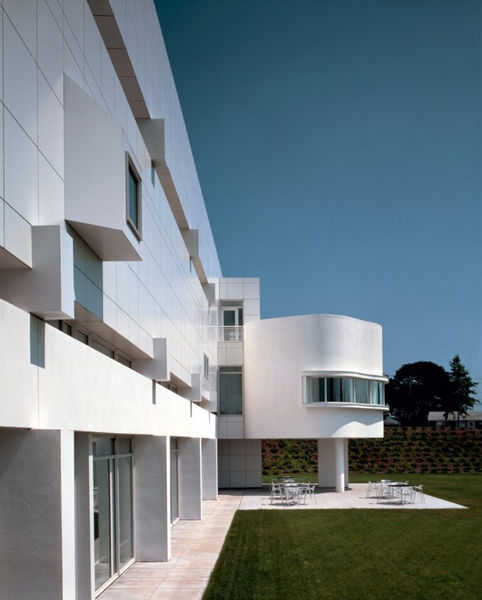
Location: 41 Pinelawn Road, Melville, New York
Architect: Richard Meier (Pritzker Prize, 1984)
Completed: 1980s (during Meier’s peak white modernist phase)
Style: International Style / Modernism
Key Features:
-White façade with Meier’s signature geometric grids
-Strong use of glass for natural light and transparency
-Open-plan interiors designed for flexibility and collaboration
-Clean lines, rectilinear volumes, and balanced proportions
Function: Swissair’s U.S. Headquarters (corporate offices)
Notable: Reflects Meier’s philosophy of light, order, and clarity; connects to his larger body of work (Smith House, High Museum, Getty Center).
Swissair Headquarters:
Sun Diagrams


Spring
Winter
Summer
Fall
Aerial View Of Site
Site Plan


Context Around Site

Location Overview:
-North of the building lies the Long Island Expressway (LIE), a major highway that provides convenient access to and from the area, making the location easily reachable for commuters and visitors alike.
-South and East of the building are commercial zones consisting of a variety of office buildings and business establishments. This proximity to other commercial properties makes the location ideal for business operations, networking, and access to local services.
-West of the building is a residential area, including a well established housing complex. This adds to the community feel of the neighborhood and provides a potential customer or employee base within walking distance.
Zoning Analysis
Zoning Code Review – C-2 Office Building District
Property Type: Single-Use Office Building District (C-2)
Important Reminder:
Residential construction is not allowed by default in C-2 zones.
A variance is required unless the residential use is already approved by the Town or considered a legal pre existing use under Section 198-102.
What You Can Include Permitted support uses:
-Employee cafeteria
-Auditorium
-Day care center
-Storage of records or materials related to the business
-Off-street parking and loading
-Business signs (regulated)
-Limited product sales (only if part of main business)
Building Requirements (C-2 District)
Parking & Loading Rules Setback Requirements for Parking


Existing Floor Plans

Cellar Plan:

First Floor Plan:
Second Floor Plan:


Roof Plan:
Existing Elevations
Front Elevation:

Rear Elevation:

Left Side Elevation:

Right Side Elevation:

Existing Sections
Section 1:


Section 2:
Existing Building Diagrams


Exploded 3D
Render View

Section 3D Renders


Building 3D Renders


Building On Site 3D Renders
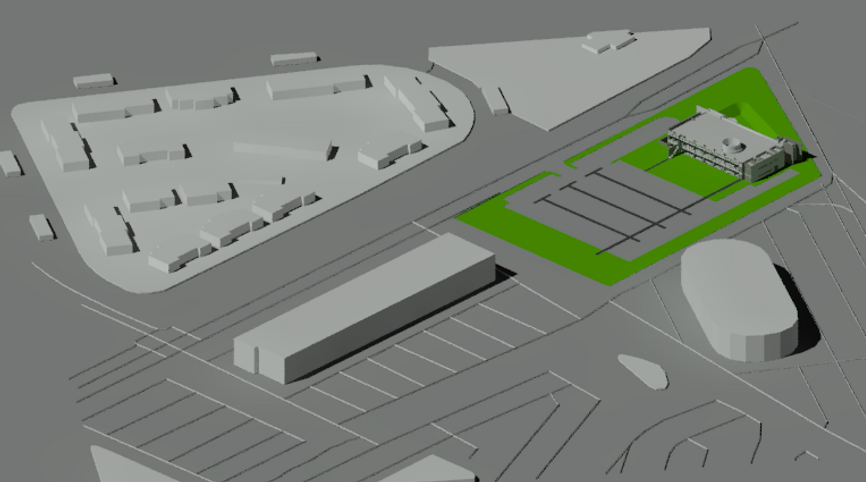
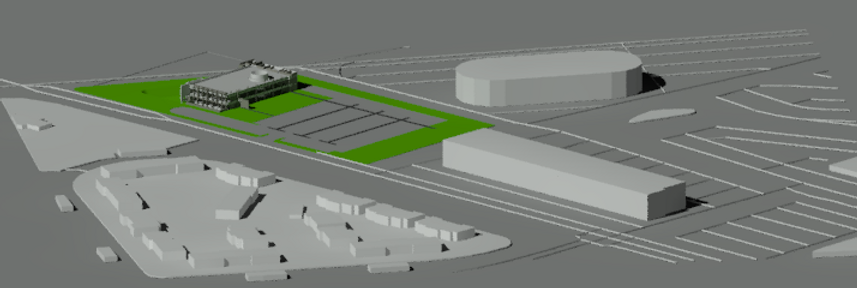

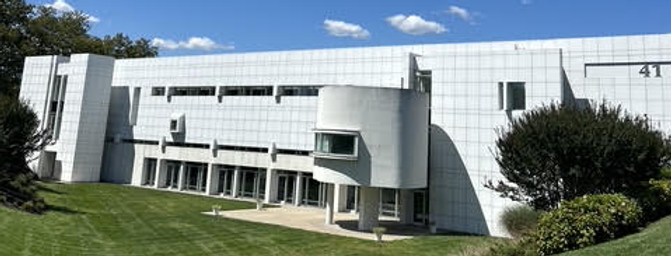
Photos On Site

Outside On Site Views

Interior Image
On Site View


Design Goal & Process
For the purpose of this project, we will assume building is still occupied as the Swissair
Headquarters and they are the client. Their Worker’s Housing needs must accommodate for 2% of Swissair’s Work Force at 41 Pine lawn Road, Melville, NY 11747, the company’s
headquarters designed by Architect Richard Meier, a recipient of the Pritzker Architecture
Prize in 1984 (often referred to as the Nobel Prize of architecture).
Total Occupants:
• 855 Occupants
• 2% of Total Occupancy: 16 Occupants (16 Apartment Units)
Housing Requirements (these are suggested sizes and can vary as the project is developed):
• 14 Studio Apartment Units to be 500 S.F. ea.
• 2 Duplex Apartment Units to be 1,000 S.F. ea.
• Circulation (Hallways) to account for roughly 1,200 S.F.
• Lobby to account for roughly 300 S.F.
• Community space approx. 500 S.F.
• Total Area (Approx.) = 13,000 S.F.
Using Peter Rowe’s framework from
“A Priori Knowledge and Heuristic Reasoning in Architectural Design.” Rowe identifies five
heuristic strategies that often guide the design process:
1. Anthropometric Analogies
2.Literal Analogies
3.Environmental Relations
4.Typologies
5.Formal “Languages” implementing these heuristics into our design process was key in each purposely for an extension of worker housing for the Swissair Headquarters.
Design 1 Proposal: Meier's Style
Heuristic Used-Formal “Languages”
Formal Language is used when employing rule-based systems, whether classical, patterned, or personally developed (modern, post-modern, deconstruction, Meier’s style, etc.).
For this design in particular we used Meier's design style from his previous work. Specifically from his work on the Jubilee church in Rome, Italy. As well as The Jesolo Lido By Richard Meier & Partners in Italy.
Metaphor-
The form and function of the shells in this design was this idea of sheltered protection for the workers housing. The shells being a barrier between the main road and apartments behind it.
Inspiration

The Jesolo Lido By Richard Meier & Partners in Italy
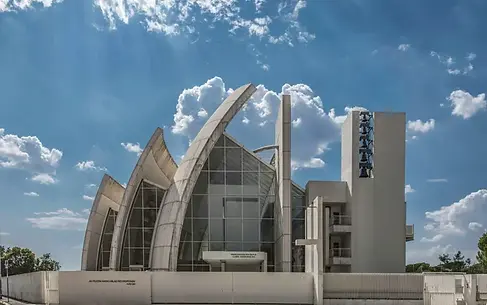
The Jubilee Church By Richard Meier in Rome, Italy
Proposed Building Diagrams

1st Floor
2nd Floor
3rd Floor
Design Process
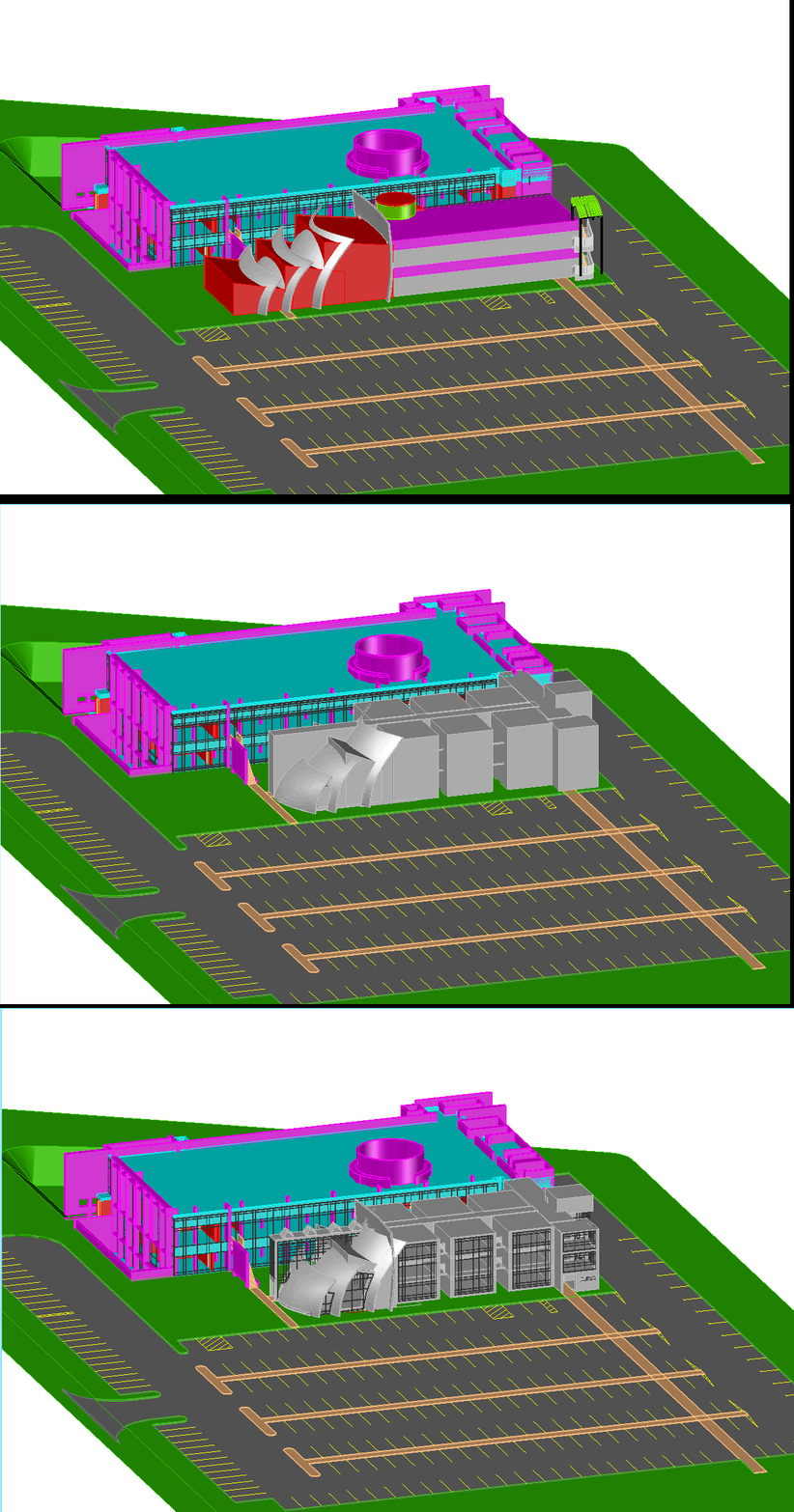
Rendered Roof Plan

Rendered Elevations
Front

Right Side

Left Side

Rendered Section

Axonometric View


Copilot Render

Lumion Renders


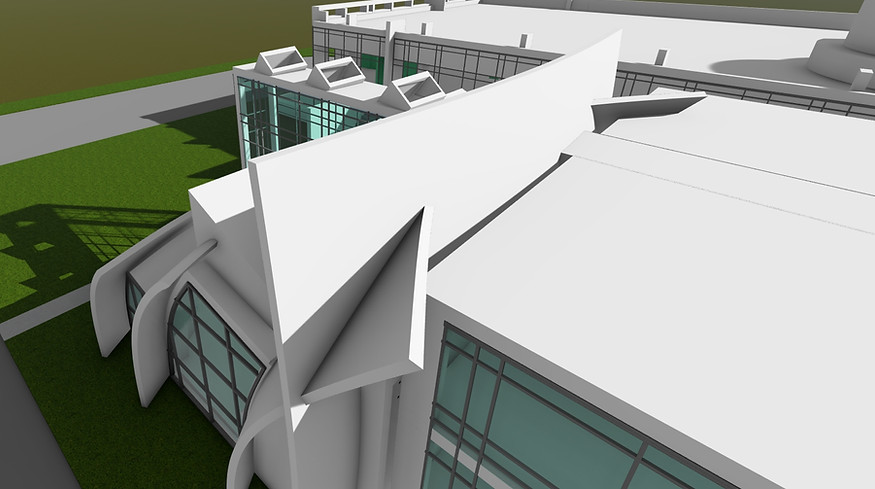
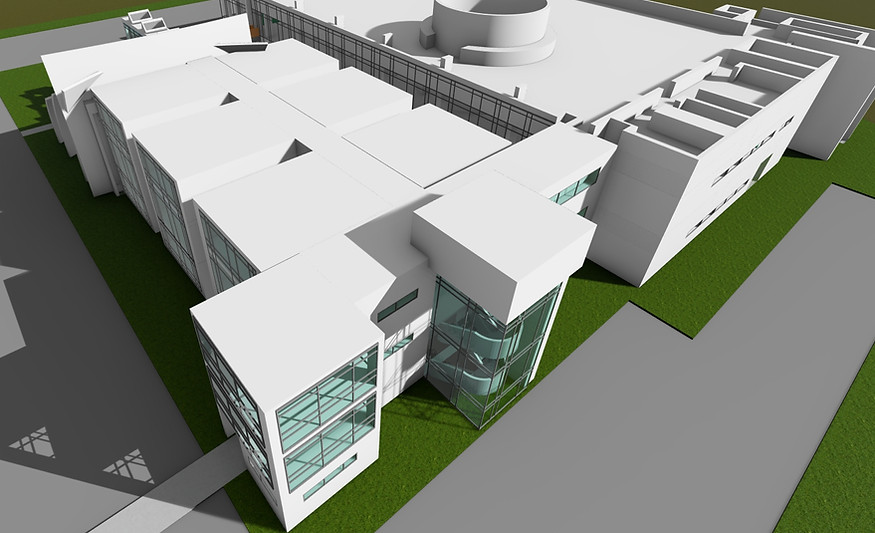


Copilot Render

Design 2 Proposal: The Gear
Heuristic Used-Literal Analogies
Literal analogies are used when borrowing existing forms. It is split into two subjects:
o Iconic: symbolic or natural references (e.g., Sydney Opera House’s shell-like roof).
o Canonic: abstract proportional systems (e.g., grids, platonic solids)
In this instance, we used "Iconic" for its symbolic meaning behind the idea of the design.
Metaphor-
The form and function of the gear in this design had a symbolic meaning of a gear being part of a larger machine-just like workers being essential components of this organization. Gears only work when meshed together, a metaphor for cooperation, community and interdependent for the worker housing.

1st Floor
2nd Floor
3rd Floor
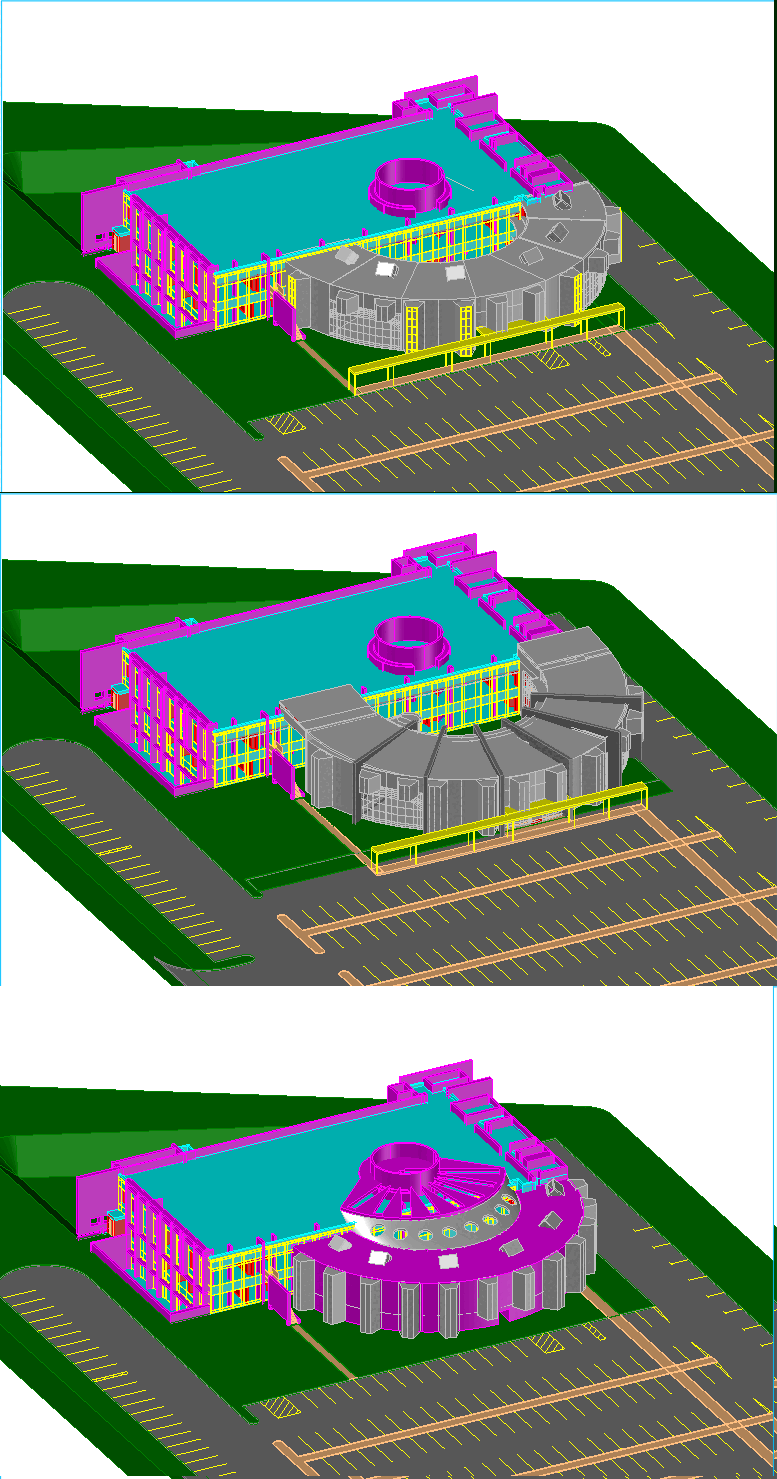
Design Process
Rendered Roof Plan

Rendered Elevations
Front

Right Side

Left Side


Rendered Section
Axonometric View


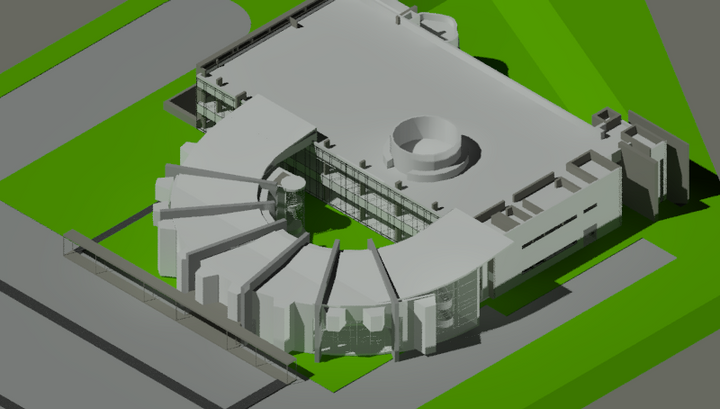
Lumion Renders


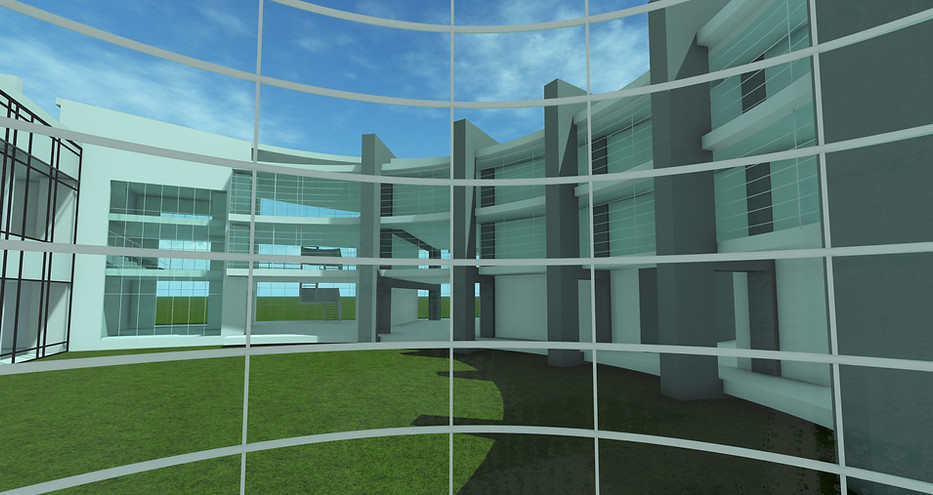


Copilot Render

Design 3 Proposal: Arm
Idea-Cloistered Housing As Corporate Culture
This design first led with the idea of a cloister in the middle space of the extension of worker housing.
From the monastery's medieval architecture, such as Saint Gall and Saint Cole.
Heuristic Used-
Literal Analogy - Iconic (Caring Arm) & Prototype (Monastery)
Caring arm of the human body and protective environment as a guide. This idea originally started out as a prototype for a cloister; it meshed and turned into a symbolic meaning for a human arm.
Metaphor-
The form and function of the comforting arm as a spline of circulation for this design. It represents the corporate comfort for its workers as well as leading design with a cycle of working, eating, and sleeping, providing the essential needs of these workers. Enculturating what Swiss Air is and represents in comfort for its workers.
Inspiration


Proposed Building Diagrams

Cellar
1st Floor
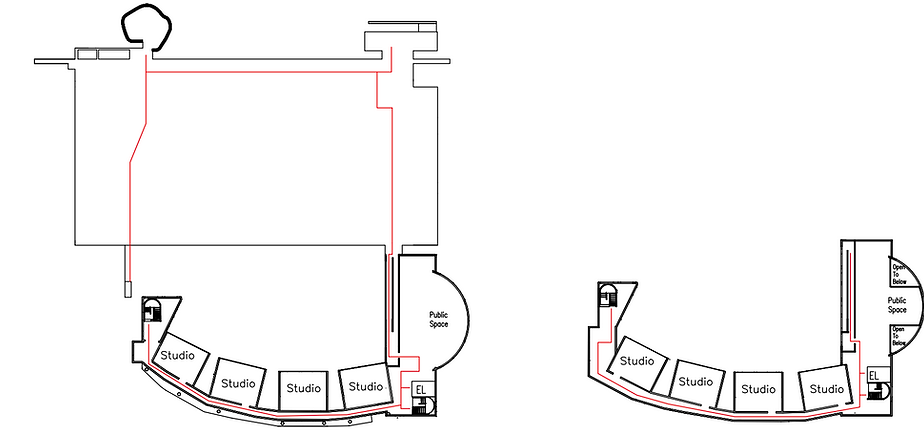
2nd Floor
3rd Floor
Design Process
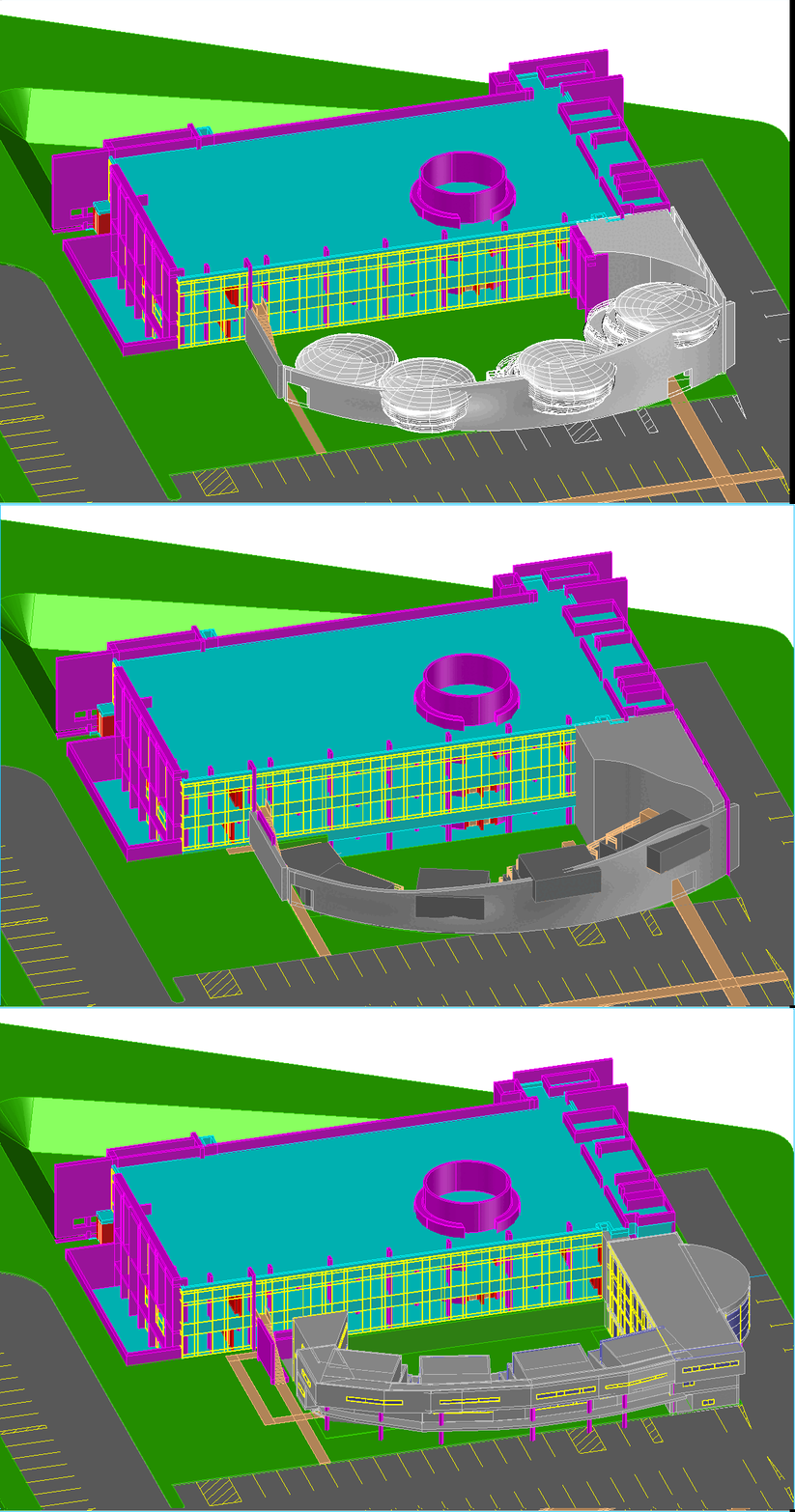
Rendered Roof Plan

Rendered Elevations
Front

Right Side

Left Side

Rendered Section

Axonometric View
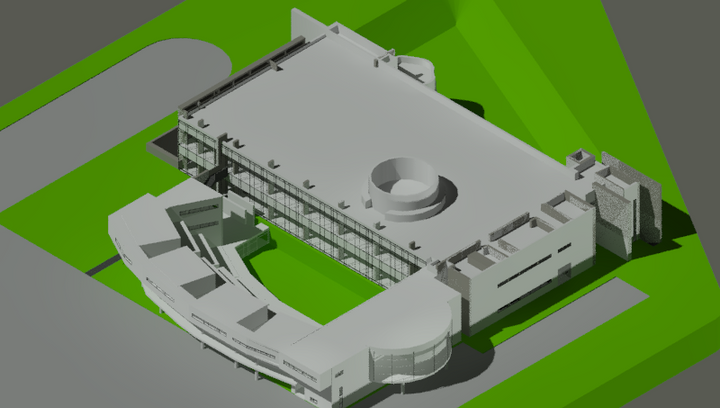


Copilot Render

Lumion Renders


Final Design:
Chosen: Preliminary Design 1- Meier's Style
Design Improvments


SWOT Report:
Based On External Reviewers Comments
SWOT Report — Swissair Headquarters Worker’s Housing Extension
Architectural Design 4 — Preliminary Design Phase
Location: 41 Pinelawn Road, Melville, NY
Client: Swissair Headquarters
Designer: Sebastian Alvarez & Kevin Aviles
Design Heuristic: Formal “Languages” — inspired by Richard Meier’s architectural vocabulary and the shell tectonics of the Jubilee Church in Rome, Italy, and The Jesolo Lido By Richard Meier & Partners in Italy.
STRENGTHS
-
Strong Conceptual Foundation and Formal Language
The design applies Meier’s formal design principles—rational order, light modulation, and geometric clarity—while integrating sculptural shell elements that express the metaphor of shelter and protection for worker housing. This hybrid approach creates a compelling architectural dialogue between the existing corporate headquarters and the new residential extension. -
Metaphoric and Spatial Clarity
The curving shell structures effectively form a protective buffer against the adjacent roadway, creating a physical and symbolic barrier that enhances privacy and comfort for residents. Reviewers praised the clarity of this metaphor and its successful translation into architectural form. -
Programmatic Completeness and Circulation Logic
External reviewers acknowledged the project’s comprehensive accommodation of all required units and spaces—14 studio apartments, 2 duplex units, lobby, community space, and circulation areas. Circulation is clearly defined and efficiently connected to the existing structure, ensuring functional coherence. -
Visual Continuity with Existing Building
The use of glazing and white cladding extends Meier’s architectural language, maintaining a cohesive visual identity for the Swissair campus. The transparent vertical circulation core reinforces the sense of lightness and openness central to Meier’s aesthetic.
WEAKNESSES
-
Proximity to Existing Building
External reviewers expressed concern that the extension sits too close to the existing headquarters, potentially compromising natural light, ventilation, and privacy for both structures. Increasing the setback or introducing a transitional courtyard could strengthen spatial comfort and hierarchy. -
Overuse of Glazing
The extensive glass façade, while consistent with Meier’s style, was critiqued for potentially reducing privacy and increasing solar gain—issues particularly relevant for residential use. Future iterations should explore shading devices, fritted glass, or layered façades to maintain transparency while enhancing comfort. -
Limited Use of Site Potential
The existing parking lot adjacent to the extension was identified as an underutilized area. Reviewers suggested repurposing portions of this space for landscaped courtyards, outdoor seating, or green communal zones to improve livability and environmental performance. -
Apartment Orientation
Apartments facing directly toward the existing building were noted as a weakness. Adjusting window placement, adding screens, or varying façade articulation could mitigate privacy concerns and enrich the resident experience. -
Form–Function Balance
While the sculptural shells are conceptually strong, their expressive geometry risks overshadowing the clarity of the modular apartment blocks behind them. Refinement in scale and proportion would enhance unity between expressive form and rational program.
OPPORTUNITIES
-
Enhanced Environmental Strategies
The project offers potential for integrating passive solar control, natural ventilation, and energy-efficient glazing systems—transforming the formal shell into both an aesthetic and sustainable element. -
Activation of Outdoor Space
Reworking the parking lot area into usable green or social spaces presents an opportunity to create a stronger sense of community and soften the transition between corporate and residential zones. -
Architectural Continuity and Innovation
The extension allows for an evolution of Meier’s architectural language—balancing rational structure with sculptural expression. Using digital fabrication and modern materials can reinterpret Meier’s legacy for a contemporary audience. -
Prototype for Corporate Housing Design
The Swissair extension could serve as a model for future employee housing—blending proximity, comfort, and architectural quality to enhance workplace well-being.
THREATS
-
Contextual Tension with Existing Structure
The tight adjacency to the headquarters risks visual and spatial congestion. Without careful proportioning and spatial buffering, the extension may appear crowded or subordinate. -
Constructability and Cost
The complex shell geometry and high glazing ratio may challenge constructability and exceed budget expectations for workforce housing. Simplified detailing or prefabricated components may be required. -
Energy Performance and Privacy Risks
The large glass surfaces, if unmitigated, could lead to overheating, glare, and visual exposure. These factors may threaten both occupant comfort and the project’s long-term sustainability. -
Regulatory Constraints
Zoning and code requirements regarding mixed-use occupancy, parking reduction, or setback adjustments could pose approval challenges that must be addressed during schematic development.
CONCLUSION
The proposed Swissair Worker’s Housing extension demonstrates a sophisticated application of Formal Language design principles rooted in Meier’s architectural grammar while integrating an expressive shell metaphor of protection. External feedback highlights strong conceptual clarity, programmatic completeness, and coherent circulation, while also identifying important opportunities for refinement—particularly in site utilization, façade performance, and building proximity. With continued development, the project has the potential to embody both the disciplined rationalism and expressive humanism characteristic of Meier’s architectural legacy.
Proposed Final Floor Plans
First Floor Plan:

Second Floor Plan:
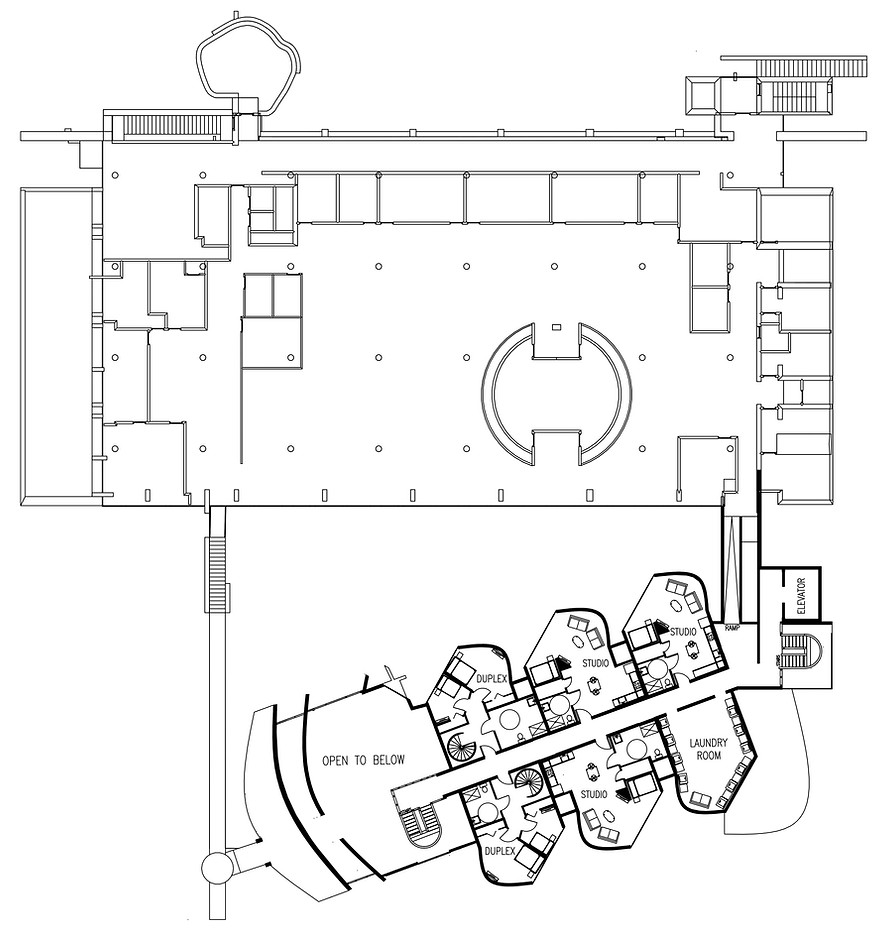
Third Floor Plan:

Proposed Unit Floorplans:
Standard Studio:

Standard Duplex First Floor:

Standard Duplex Second Floor:

Proposed Final Rendered Elevations
Front Elevation:
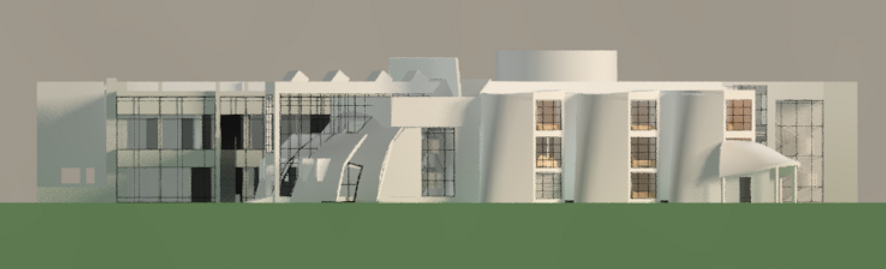
Right Side Elevation:

Left Side Elevation:

Rendered Roof Plan

Proposed Final Sections


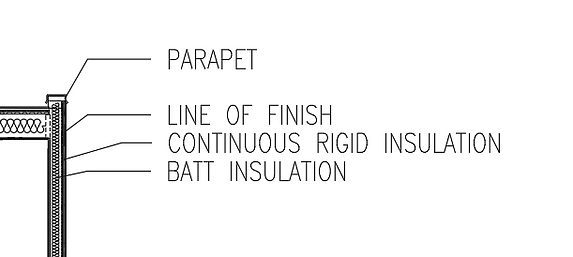
Construction Wall Section:

Construction Detail:


Proposed Final Building Render
Exploded 3D
Render View

Section 3D Renders

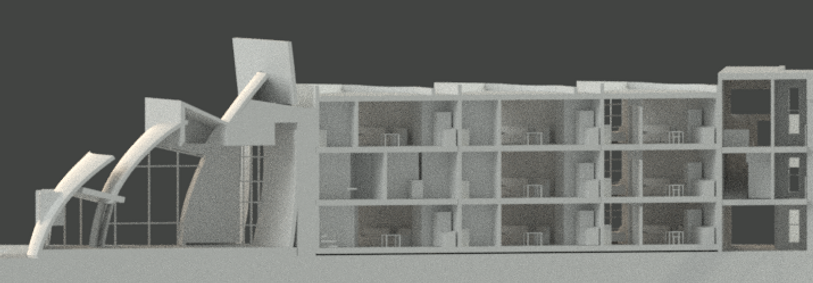
Building 3D Renders:
Axonometric Views

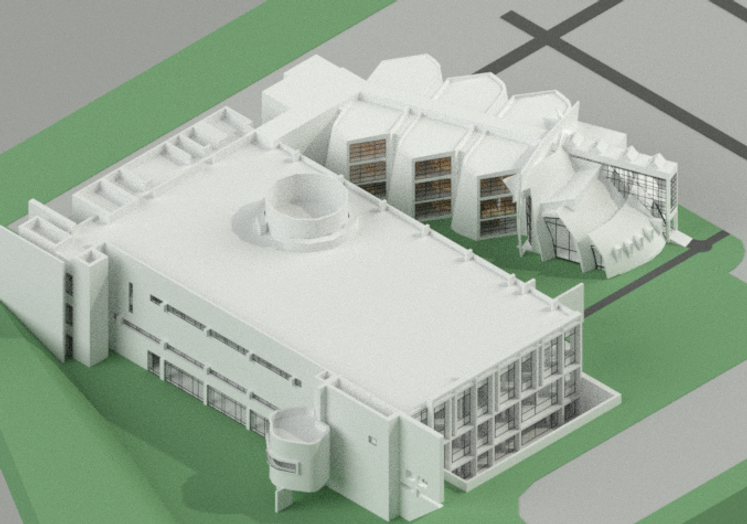

Building On Site 3D Renders


3D Render Site Plan

Lumion Renders


Exterior:


Interior:


Copilot Render


Cost Estimate For Proposed Final Building: